FYPD (First-Year Player Draft) rankings evaluate newly drafted college stars, high school standouts, and international signees for dynasty baseball leagues. Each prospect is scored using MLB arrival ETA, Future Value (FV 20–80 scale), positional scarcity, and organization development track record to determine their immediate draft pick trade value.
The 2026 FYPD Draft Board & Scouting Evaluations
The First-Year Player Draft represents the primary mechanism for injecting fresh generational talent into dynasty rosters. Selecting wisely in the initial two rounds of an FYPD draft can accelerate a rebuilding timeline by multiple seasons, while squandering early picks on high-volatility arms can set a franchise back half a decade.
Top College Bats: Fastest Path to MLB Arrival
College position players drafted inside the top ten overall picks represent the gold standard of dynasty draft assets. Having refined their plate discipline against 95+ mph fastballs and advanced breaking pitches across three collegiate seasons, prospects like Travis Bazzana, Charlie Condon, and Jac Caglianone project to reach the majors in under 18 months. Their floor remains exceptionally high, providing reliable multi-category fantasy contributions with minimal minor league gestation delay.
High School Phenoms: Highest Ceiling, Longest Horizon
Prep hitters selected in the first round (such as Bryce Rainer and Konnor Griffin) possess tools that scout out at 65 or 70 grades on the 20-80 scouting scale. However, their development pathway requires three to four minor league seasons as they navigate teenage swing adjustments and defensive maturation. Rebuilding teams with 3-to-5 year contention horizons can harvest massive surplus equity by stashing prep athletes before their national breakout.
International Signings & Pitching Sleeper Targets
Pitching prospects require disciplined risk management. While arms like Chase Burns and Hagen Smith possess triple-digit fastball velocity and devastating wipeout sliders, pitcher injury rates exceed 45% during the minor league climb. Savvy dynasty managers prioritize position players in Round 1 of FYPD drafts, targeting high-upside arms in Rounds 2 through 4 where draft capital expenditure is minimized.
Top College Bats
Elite SEC/ACC hitters refined against 95+ mph heat. Fastest path to MLB with sub-18-month arrival ETAs.
High School Phenoms
Raw 65-70 scouting tools with premier power/speed ceilings. Demands 3-4 years of minor league maturation.
Triple-Digit Arms
Devastating strikeout arsenals carrying 45%+ pitcher injury volatility. High upside targets for mid-rounds.
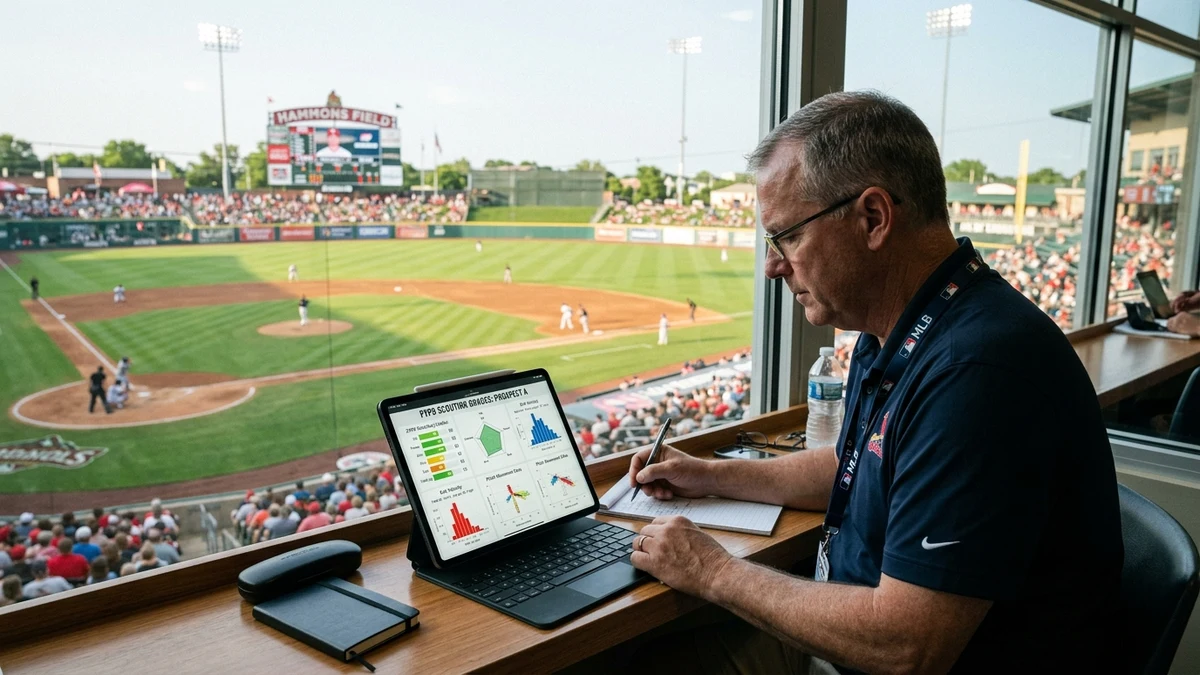
Understanding the 20-80 Future Value (FV) Scouting Scale
To translate professional scouting terminology into actionable fantasy trade decisions, our pipeline board benchmarks every minor leaguer against the standard 20-80 Future Value framework:
| Scouting Grade (FV) | MLB Role Equivalent | Projected Annual WAR | Dynasty Draft Recommendation |
|---|---|---|---|
| 70 FV (Superstar) | MVP / Cy Young Contender | 6.0+ WAR | Consensus Top-2 FYPD Selection; Hold indefinitely. |
| 65 FV (Perennial All-Star) | First-Division Core Cornerstone | 4.5–5.5 WAR | Top 5 FYPD Pick; Worth major veteran trade packages. |
| 60 FV (Plus Regular) | Above-Average Full-Time Starter | 3.5–4.5 WAR | Late Round 1 Pick; High-floor foundation piece. |
| 55 FV (Solid Regular) | Reliable Everyday Contributor | 2.5–3.2 WAR | Round 2 Target; Solid depth asset for contenders. |
| 50 FV (Average Regular) | Platoon / Low-End Regular | 1.8–2.4 WAR | Round 3–4 Flyer; High replacement-level risk. |
Factor prospect arrival timelines, volatility discounts, and roster consolidation equity.
Dynasty Board Dynasty Rankings Top 150 →Explore MLB player rankings and draft pick valuation curves across all scoring formats.
Frequently Asked Questions About FYPD & Dynasty Prospects
01 What is the 20-80 Future Value scouting scale in fantasy baseball?
Major League scouting departments utilize the 20-80 scouting scale to evaluate tools and overall potential. In fantasy dynasty rankings, a 50 FV represents an average everyday contributor, 55 represents an above-average regular, 60 represents a potential All-Star, and 65 or higher represents an elite franchise cornerstone.
02 Should fantasy managers target college bats or prep arms in FYPD drafts?
Statistical analysis of the past ten amateur drafts demonstrates that advanced college hitters from elite conferences (SEC, ACC) reach the majors in half the time of high school prospects while failing at roughly half the rate. Prep arms carry significant injury volatility.
03 When is the optimal time to trade away a top prospect?
Prospect trade value peaks during two distinct windows: right before annual FYPD drafts when rookie hype reaches a frenzy, and immediately upon an official Major League promotion announcement before the player faces Major League pitching adjustments.